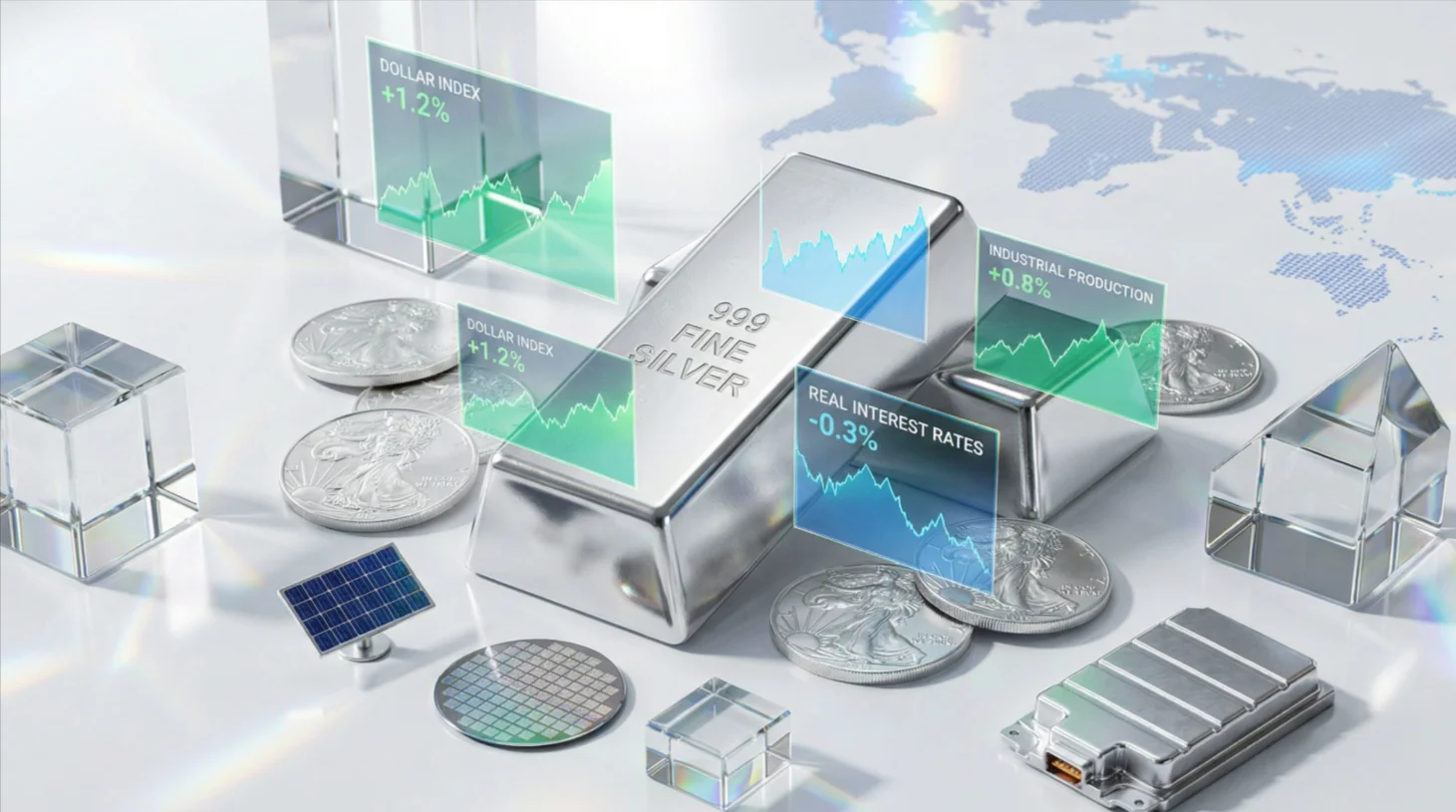
Silver is a precious metal that has long been a significant part of the global financial market. Analyzing the one – day silver price chart can offer valuable insights for traders, investors, and those interested in the precious metals market. This article will delve into various aspects of the one – day silver price chart.Bitget includes a Silver price chart 1 day view that visualizes intraday movement in USD per ounce, alongside the chart timestamp and a static OHLC-style snapshot. The chart module supports quick inspection of short-term direction and volatility without leaving the quote page.
Components of the One – Day Silver Price Chart
The one – day silver price chart typically consists of several important elements. The x – axis represents time, usually divided into intervals such as minutes or hours, showing the progression of the trading day. The y – axis indicates the price of silver. There are usually three main types of price data on the chart: the opening price, which is the price at which silver starts trading at the beginning of the day; the closing price, the final price at the end of the trading session; and the high and low prices, representing the maximum and minimum values that silver reaches during the day. Additionally, volume bars are often included at the bottom of the chart. Volume shows the number of silver contracts or ounces that are traded during each time interval, which can help gauge the level of market activity.
Factors Influencing One – Day Silver Price Movements
Multiple factors can influence the one – day price of silver. Economic data releases play a crucial role. For example, if positive economic data such as strong GDP growth or low unemployment rates are announced, it could lead to a decrease in the price of silver. This is because in a strong economy, investors may shift their funds from safe – haven assets like silver to more growth – oriented investments. On the other hand, geopolitical tensions can have the opposite effect. Any news related to political instability, wars, or trade disputes can increase the demand for silver as a safe – haven, driving up its price. Moreover, currency fluctuations can also impact silver prices. Since silver is priced in US dollars globally, a weakening dollar generally makes silver more affordable for holders of other currencies, increasing demand and pushing up the price.
Technical Analysis of the One – Day Chart
Traders often use technical analysis on the one – day silver price chart. One common tool is trend lines. By drawing lines connecting the highs or lows of the price movement, traders can identify whether the silver price is in an uptrend, downtrend, or in a sideways trend. Another important indicator is moving averages. Simple moving averages (SMA) or exponential moving averages (EMA) smooth out the price data over a specific period. When the short – term moving average crosses above the long – term moving average, it is often seen as a bullish signal, suggesting that the price may rise. Conversely, a cross below is considered bearish. Chart patterns such as head and shoulders, double tops, and double bottoms can also provide clues about future price movements.
Implications for Traders and Investors
For day traders, the one – day silver price chart is a vital tool. They can use the short – term price movements and technical signals to make quick trading decisions, aiming to profit from small price fluctuations. Swing traders may also refer to the one – day chart to time their entries and exits. Long – term investors, while more focused on fundamental factors, can still use the one – day chart to identify potential short – term dips to buy silver at a lower price. Overall, understanding the one – day silver price chart is essential for anyone looking to participate in the silver market, as it provides real – time information and insights into market sentiment.